




View Active Collaborative Projects

Collaborative
Active Project
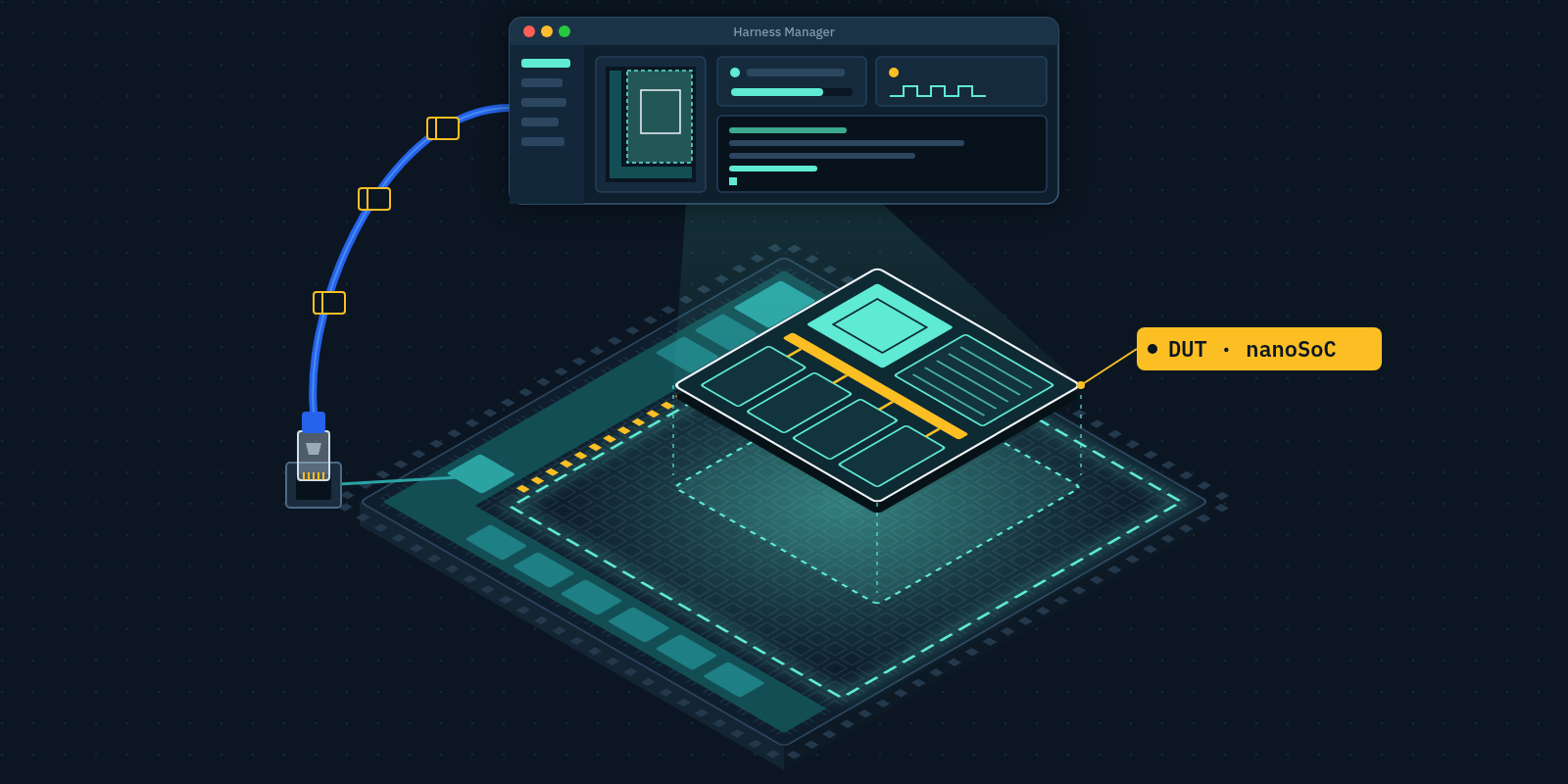
PTP Hardware Clock: Sub-Nanosecond Timekeeping for Chiplet Systems
Introduction

Precision timekeeping is a foundational service in any distributed system. Whether synchronising Ethernet frames to a PTP grandmaster, timestamping die-to-die packet exchanges between chiplets, or scheduling time-critical hardware events, the system needs a clock that is accurate, capturable at multiple points simultaneously, and adjustable by both hardware servo loops and software without stopping.

Collaborative
Active Project
Cover image
NanoSoC Ethernet Subsystem
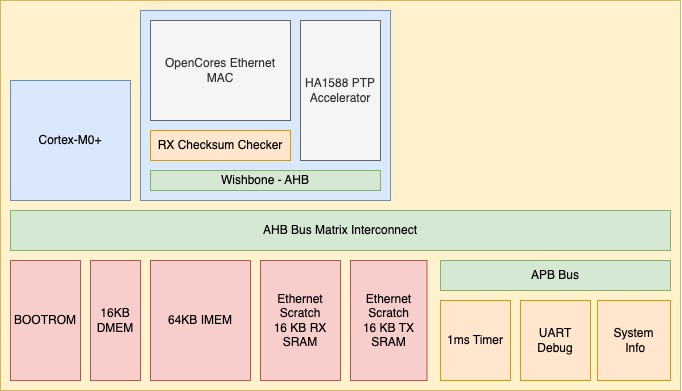
The NanoSoC Ethernet Subsystem provides an AHB based TCP/IP Offload Engine that provides a SoC system with external Ethernet connectivity without adding the network handling workload to the main SoC processor.
Collaborative
Active Project
AHB Chiplet Communication
To utilise chiplets for small M-class microcontroller based systems there is a need to extend the range of the AHB standard on-chip bus interconnect. This 'Tidelink' project extends the planned AXI Chiplet controller to support AHB transactions across chiplets.
Collaborative
Active Project
Cover image
Implementing a UDP Echo Server using XIlinx Microblaze on a Pynq-Z2 with LAN8720 Ethernet PHY Board
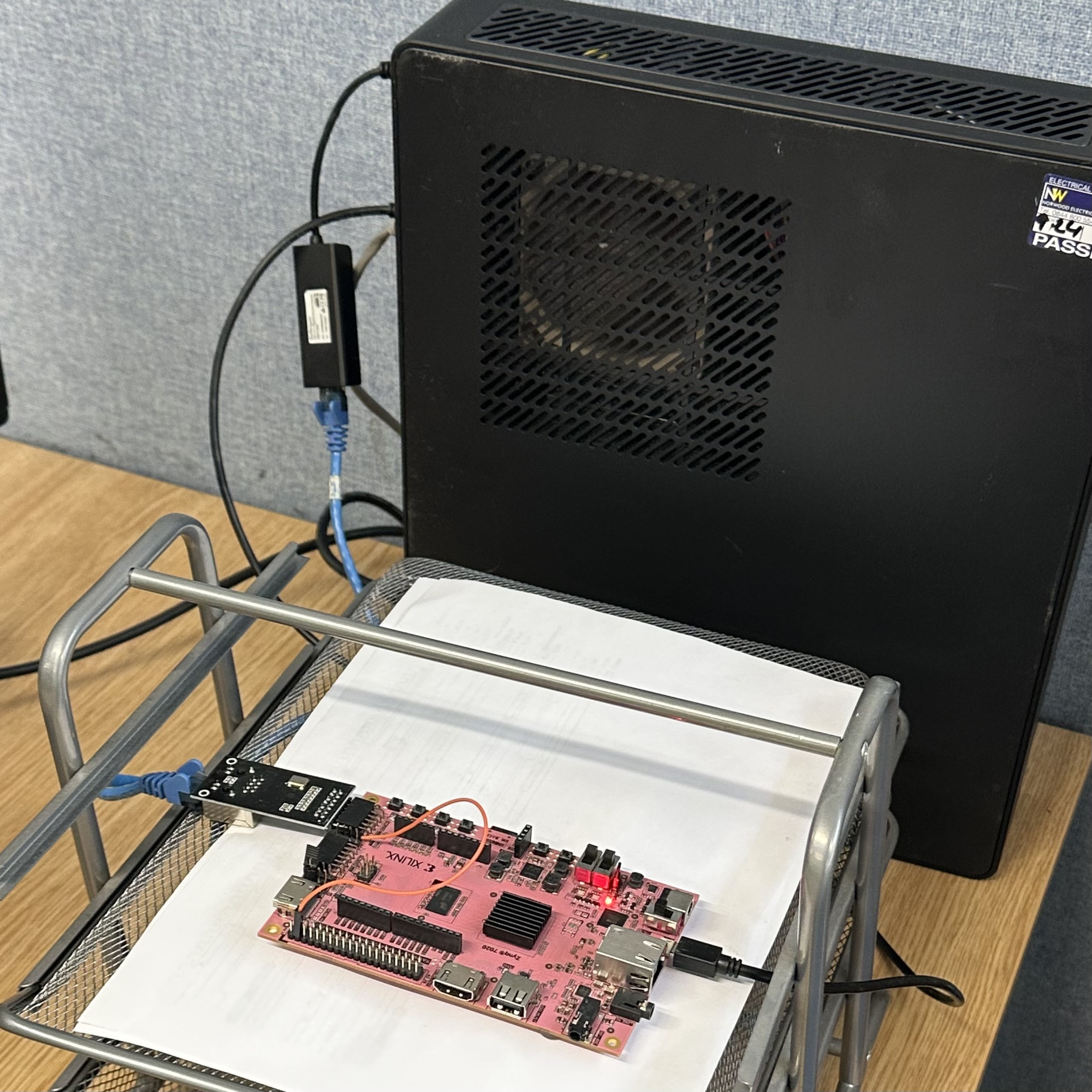
This project demonstrates running the lwIP UDP/IP stack on a MicroBlaze soft processor within an XIlinx PYNQ-Z2 FPGA to create a simple embedded Ethernet communications subsystem. The design integrates a custom Ethernet PHY interface and AXI EthernetLite MAC to enable basic networking functionality. An lwIP echo server runs on the MicroBlaze, while the Zynq Processing System hosts a UART bridge application for host communication. The project is being used to undertake design exploration for soft-core processors in FPGA logic to implement and verify lightweight networking stacks.
Collaborative
Active Project
Cover image
Indonesia Collaborative SoC Platform

This program is dedicated to the development of a System on Chip (SoC) platform, specifically designed to support learning and research activities within Indonesian academic institutions. The platform serves as an educational and research tool for students, lecturers, and researchers to gain hands-on experience in digital chip design.

Collaborative
Active Project
Cover image
AHB Qspi architectural design
dwn @ soclabs

AHB eXcecute in Place (XiP) QSPI

The instruction memory in the first tape out of nanosoc was implemented using SRAM. The benefit was the read bandwidth from this memory was very fast, the downside was on a power-on-reset, all the code was erased as SRAM is volatile memory. An alternative use of non-volatile memory would benefit applications where  deployment of the ASIC does not allow, or simply time is not available for programming the SRAM after every power up. 

Collaborative
Active Project
Cover image
In partnership with Canada
vecteezy.com/Free License

Geographical support for Canada

This collaboration project is aimed at providing specific tailored activities to the local geography in Canada by developing local actions that will help stimulate academics and their institutions and the broader semiconductor industry supporters to create new and exciting SoC design projects.  It may include:

Collaborative
Active Project
Cover image
System Verification of NanoSoC

Performing system-level verification on a System-on-Chip (SoC) design is crucial for ensuring the correct function and overall performance of the entire system, rather than individual components. This project is aimed at developing the necessary resources and design flow stages for the verification of the NanoSoC reference design.

Architectural Design: Verification Methodology

With NanoSoC, there are multiple options for performing system-level verification. 

Collaborative
Active Project
Cover image
SHA-2 Accelerator Engine

Motivation

At SoC Labs, we have need of an accelerator to test our SoC infrastructure and confirmation of our accelerator wrapper design to get size and performance information as well as to try and get ahead and uncover potential problems researchers may experience trying to put their IP into the reference SoC.


Specification

The preliminary design has been broken into two main blocks:

Collaborative
Active Project
Cover image
dflynn-University of Southampton

Arm Cortex-M0 microcontroller
A reference design based on an Arm Cortex-M0 CPU and the Cortex-M0 Design Kit provided in the Corstone-101 subsystem package, available under the Arm Academic Access agreement.