





Use the Tabs below to find information on community projects. Project pages have links to the 'technology' and 'design flow' stages used and ways you can comment on or join a project.
- Projects are key to community hardware design
-
As a community hardware design activity we form our collaborations around shared design actions making Projects a core of the SoC Labs community. Projects help us share and reuse hardware and software developments around core Arm IP to help us in our research goals.
- A project, takes technology and uses a design flow to make a SoC.
-
A project has a timeframe and uses the two other significant aspects of a SoC development, the selection of technology or IP blocks that make up the SoC and the design flow that is followed from specification through to final instantiation of a system. Any System On Chip usually involves the use of pre-existing IP blocks. A project team can select IP from the technology section of the site during the first stage of a design flow, Architectural Design. Later stages in the design flow support the creation of the novel aspects of the SoC design.
- Projects have a type, either active, complete (case study) or being formulated (request for collaboration)
-
Sharing information on projects much earlier than traditional academic collaboration is encouraged. Historically knowledge sharing has been at the end of the research activity, with published papers and results. As well as write up of finished projects ("case study"), ongoing projects under development ("projects") there are projects that are still being formulated ("request for collaboration") listed. We want to encourage people to engage with the project teams, for example, adding a comment to a specific project page or joining a project.
Latest Reference Design Projects
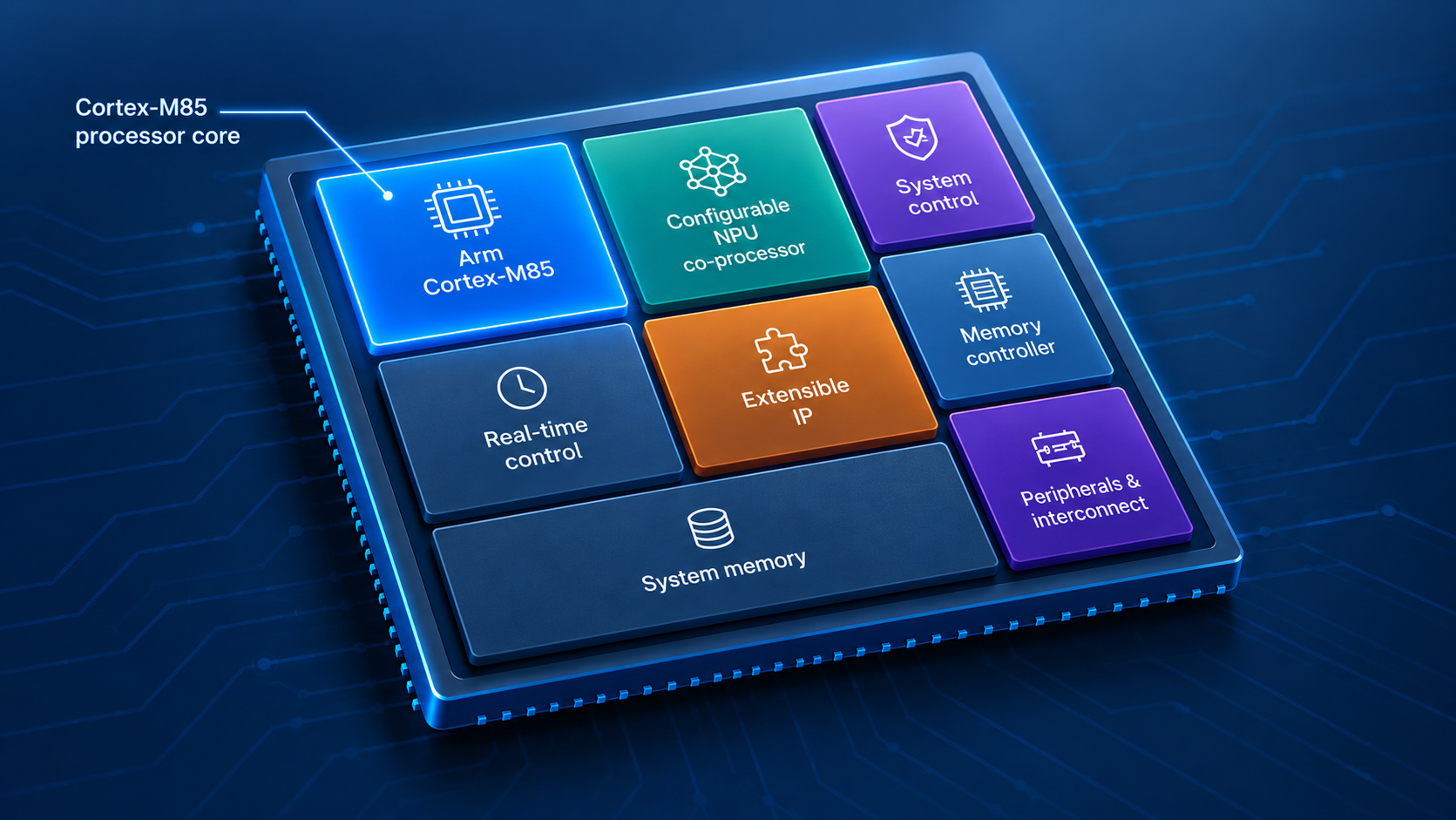
milliSoC is a reusable System-on-Chip (SoC) reference platform being developed by SoC Labs to simplify the design and implementation of application-specific processors for real-time embedded systems and edge artificial intelligence (AI). Edge based systems are often characterised by the need for real-time control, interfaces to the real world and the addition of AI. The term Physical AI has been used to describe such systems that can sense, decide, and act in real time.

 Daniel Newbrook



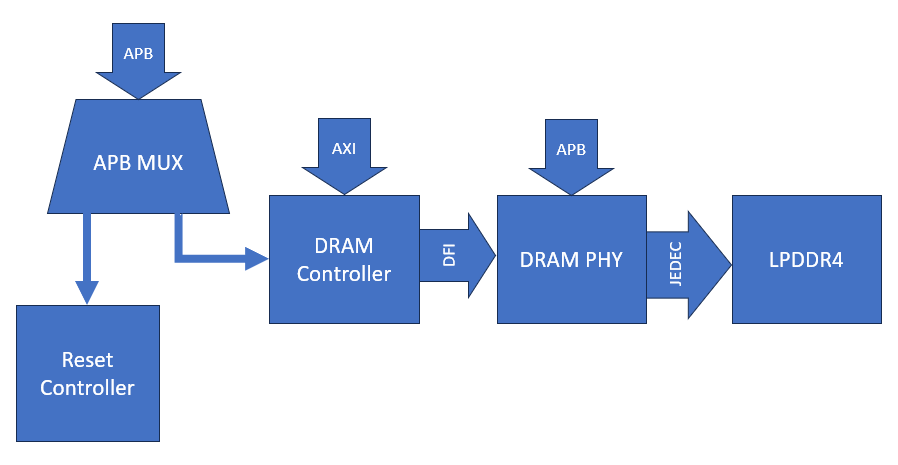
To enable full operating system support in megaSoC, a substantial amount of memory is required to accommodate the complexity of modern Linux-based software stacks, including the kernel, drivers, middleware, and user-space applications. Linux environments, unlike lightweight bare-metal systems such as nanoSoC, demand not only larger memory footprints but also consistent access to high-bandwidth memory to maintain performance across multitasking workloads. The most common approach is to incorporate external DRAM, which offers the necessary capacity and throughput.

 David Mapstone
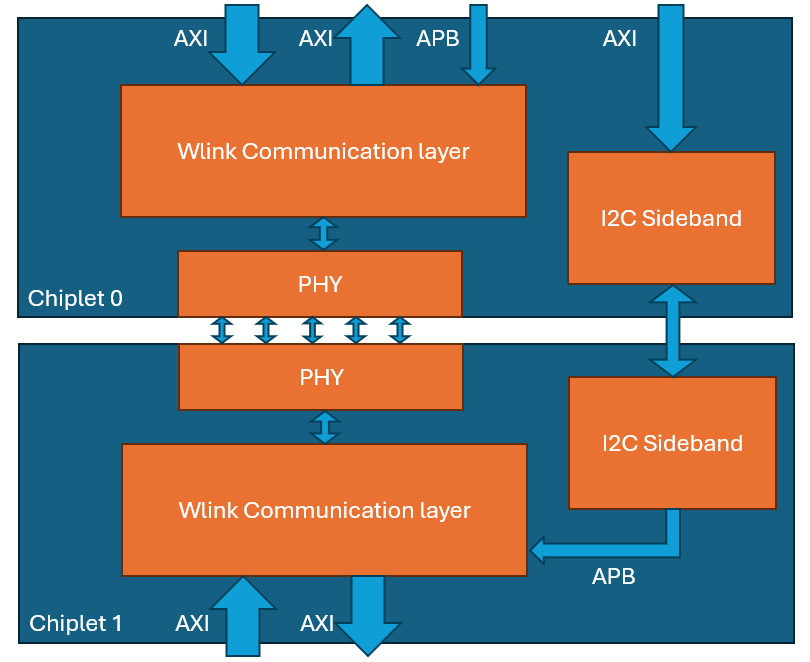
For a chiplet system, you need a communication interface between chiplets. The industry has developed standards that require complicated IPs around UCIe and the CHI interface from Arm. For many academic projects these are probably more complicated than needed . The aim of this project is to produce a simple chiplet communications interface based around the open standard AXI protocol.
The project is hosted here: https://git.soton.ac.uk/soclabs/chiplets/axi-chiplet-controller
Latest Collaborative Projects
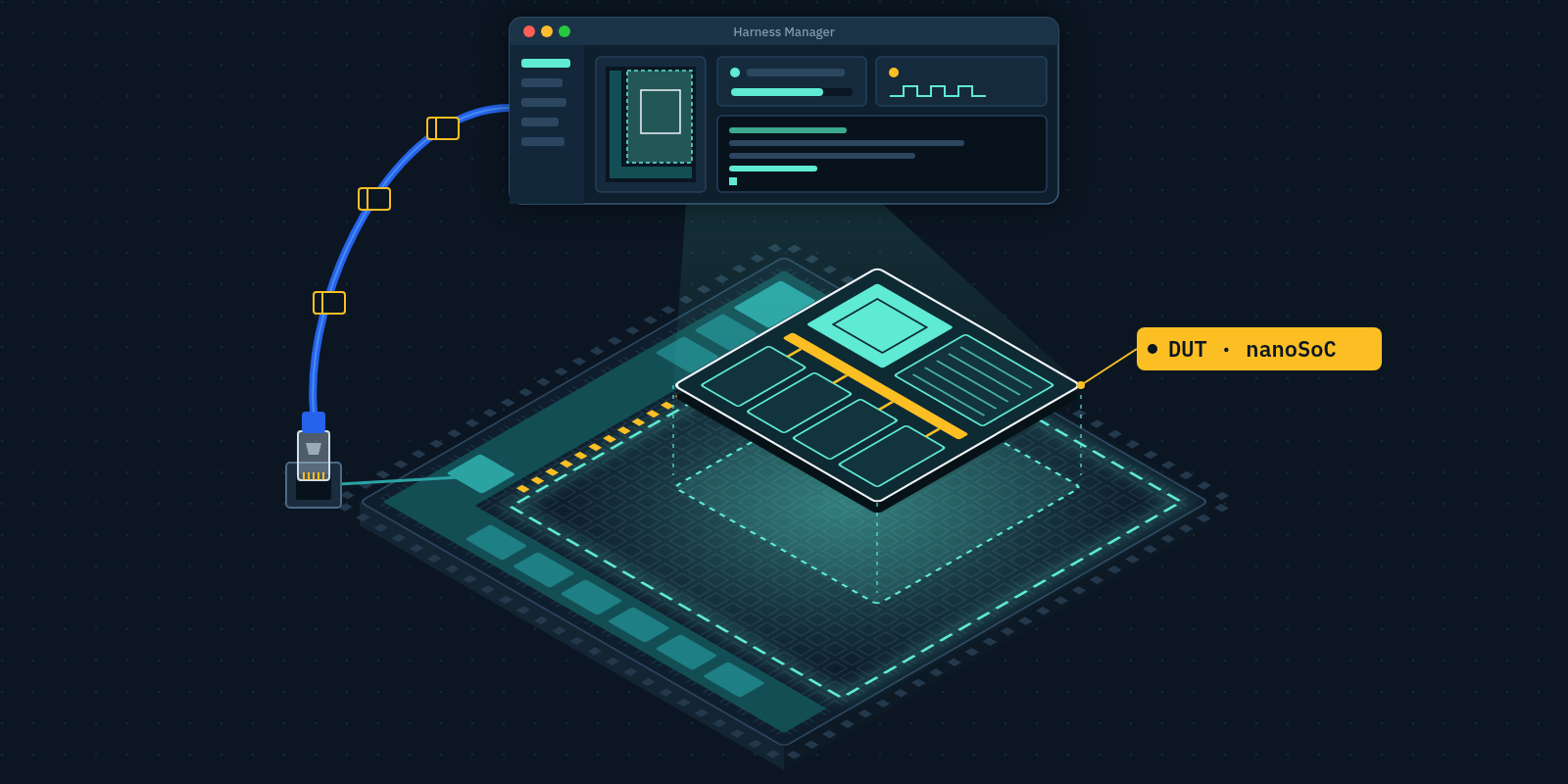
The nanoSoC Hardware Prototyping Platform turns an off-the-shelf FPGA board into an efficient environment for verification of a System on Chip design. The Platform and Harness Manager are open on GitHub, with Getting Started, User Guide and Technical Reference documents for each release. For those just interested in using the Platfrom see Getting Started at the end.

 Manfredas


The goal of this project is to design and train a CNN model for spoken digit classification and deploy it on a low-cost system-on-chip (SoC) built around an ARM Cortex-M0 microcontroller with a dedicated CNN accelerator. The SoC will be deployed as a prototype on an FPGA. Its throughput, latency and energy consumption per inference, along with its FPGA resource utilisation, will then be evaluated and compared against other systems.
 Melvin Chong Qi Wen
This project focuses on the design and FPGA implementation of a low-power hardware accelerator for a Finite Impulse Response (FIR) filter, intended to reduce noise in speech signals before speech recognition. The accelerator uses a 32-tap, 16-bit serial multiply-accumulate architecture that reuses one signed multiplier and one accumulator to reduce hardware cost and energy consumption. The FIR algorithm is verified using a MATLAB model and RTL simulation.
Latest Competition Projects
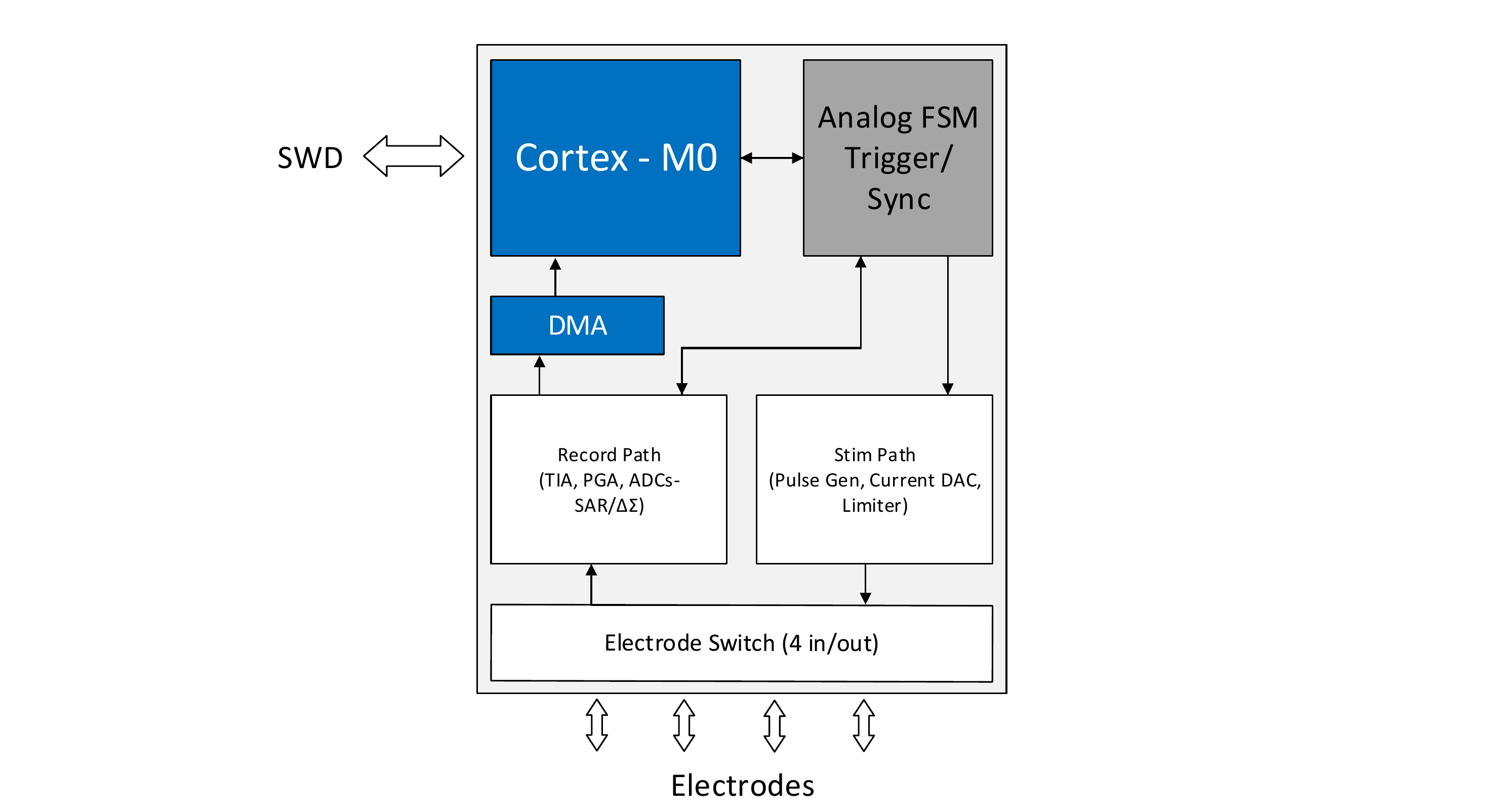
A custom chip project for recording and stimulating nerve/muscle signals, sensing an electrode's electrical activity and delivering safe, controlled electrical pulses back to it. Built around an analog front-end and dual-mode data converters for capturing both fast signal spikes and slow baseline drift, plus a closed-loop stimulation path with hardware-level safety limiting to keep delivered current within safe bounds.

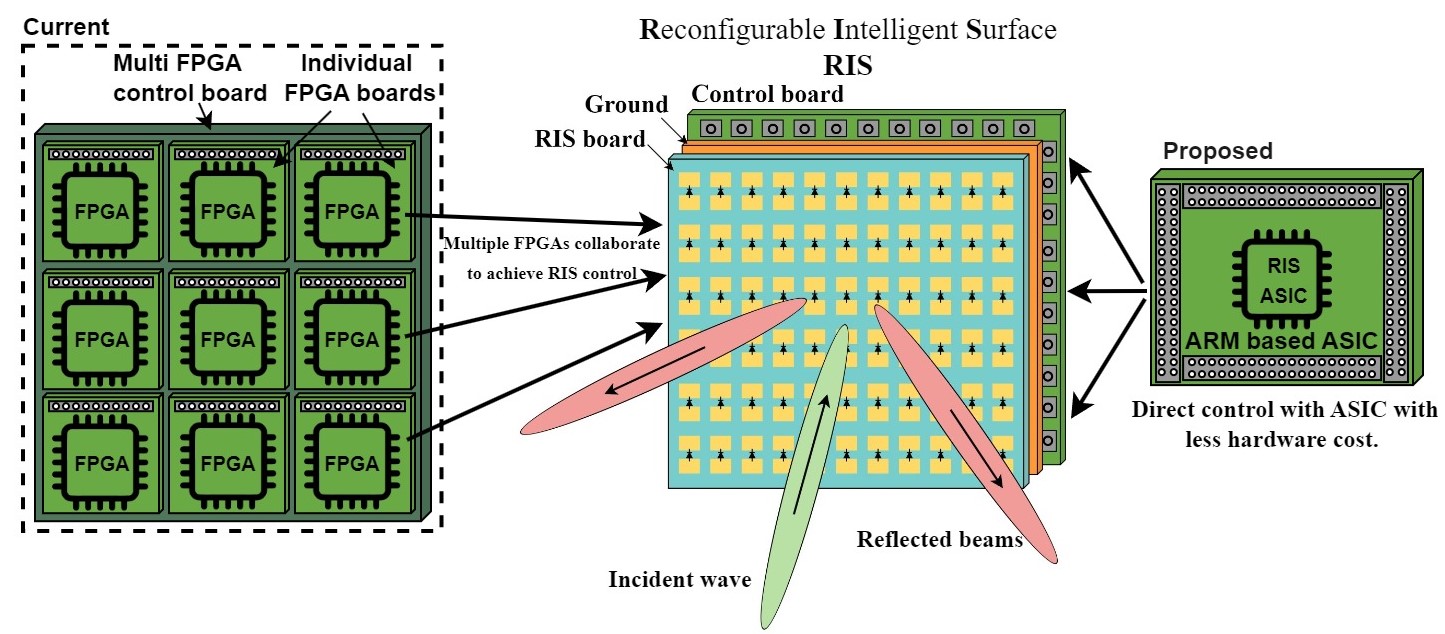
Reconfigurable Intelligent Surfaces (RIS) are planar structures composed of large arrays of tunable elements that can dynamically redirect, reflect, or shape wireless signals in the environment.
 Zhicheng Shen
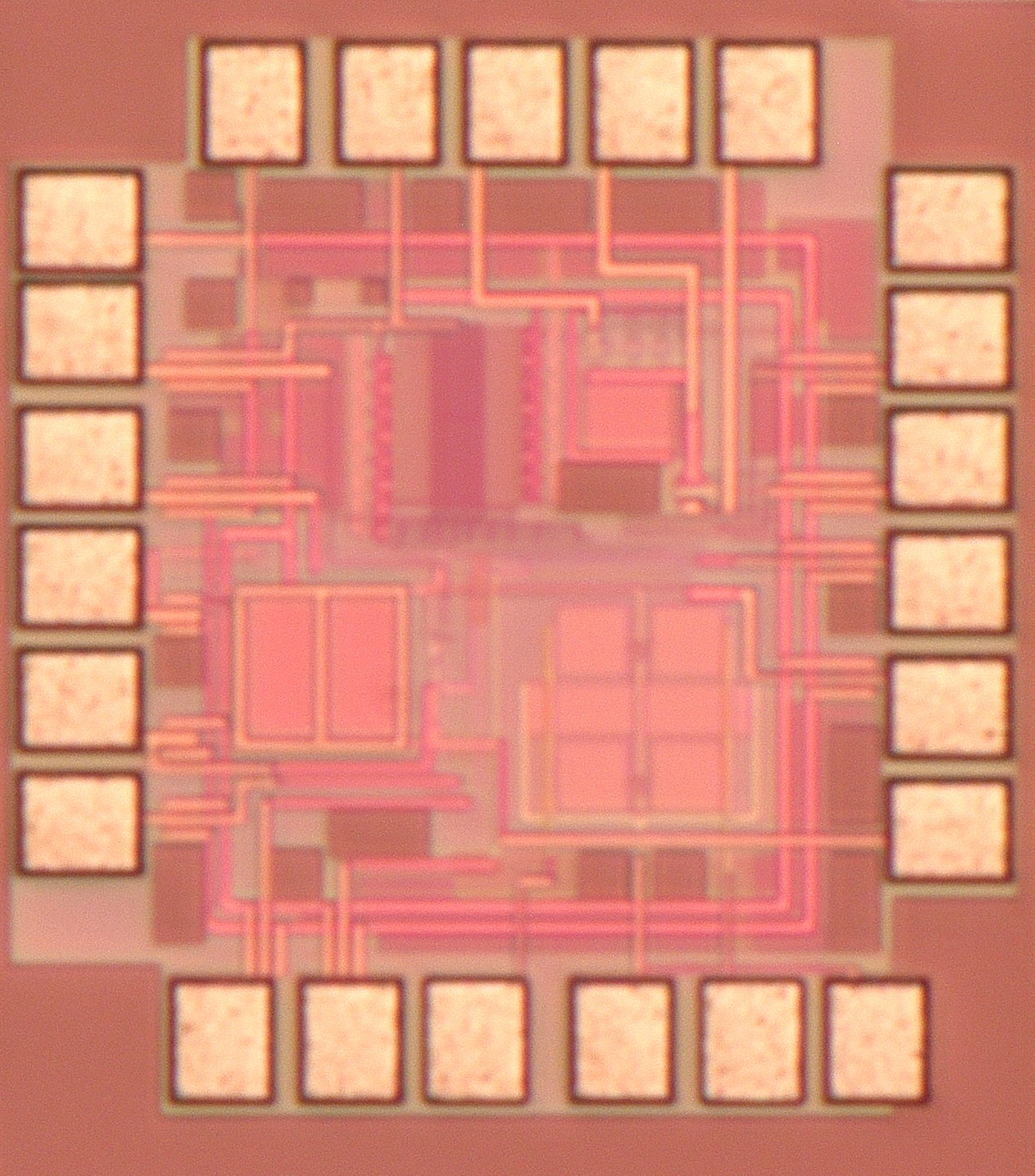
This project aims to develop an advanced RF energy harvesting (EH) receiver chip specifically designed to power embedded sensors for monitoring the condition of groceries during transportation. The receiver chip captures wireless energy transmitted from phased array antennas and converts it into electrical power that is used to operate onboard sensors, which continuously monitor critical parameters such as temperature and humidity inside delivery trucks.

 Fidel Makatia
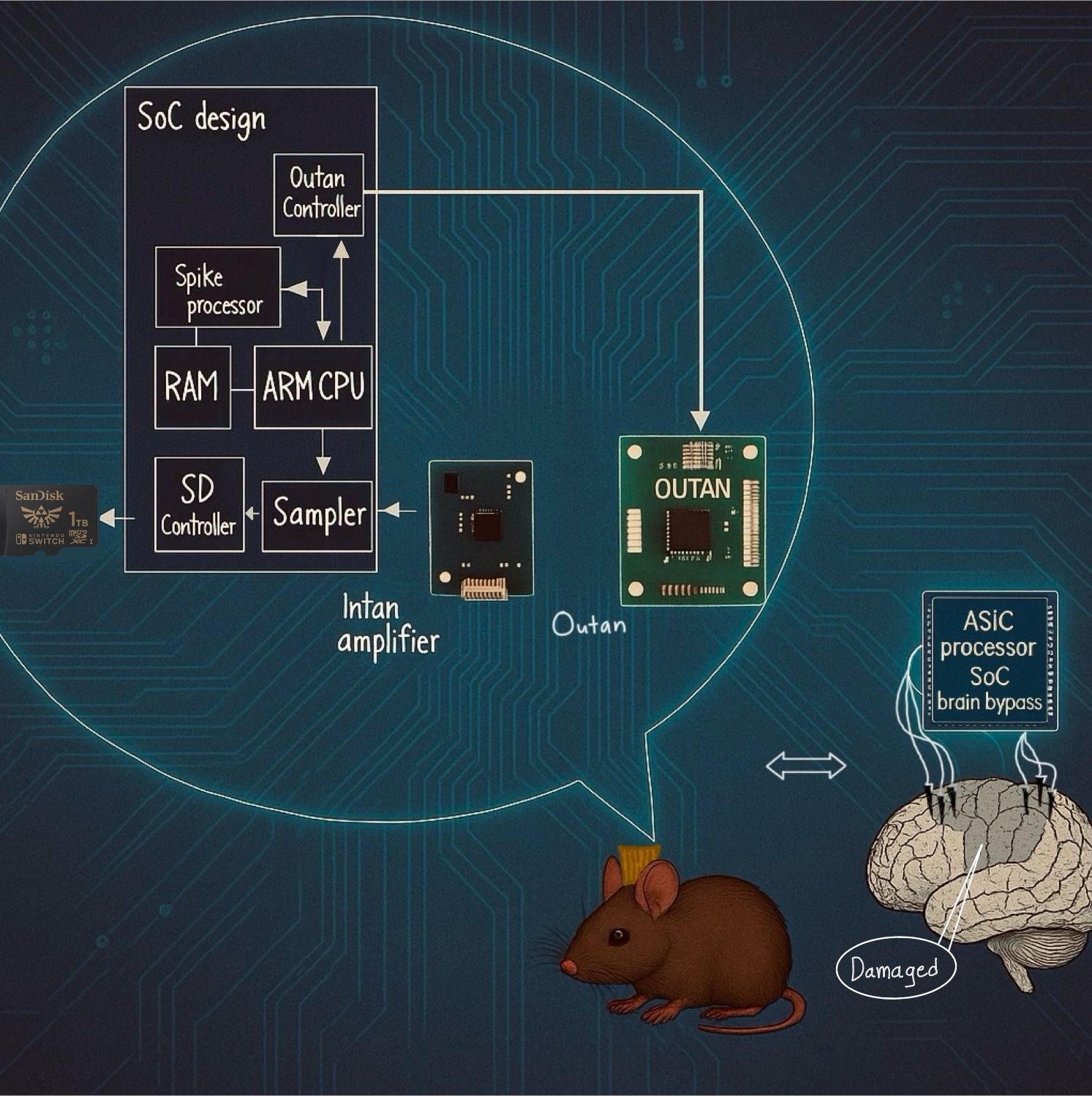
Stroke and epilepsy are among the most common debilitating neurological conditions, with a worldwide prevalence of 100 million people (World Stroke Organization, 2022) and 50 million people (World Health Organization, 2024), respectively. Present-day approaches for treating neurological and neurosurgical conditions include physiotherapy, pharmacological treatment, surgical excision, and interventions such as deep brain stimulation.




Latest Completed Project Milestones
| Project | Name | Target Date | Completed Date | Description |
|---|---|---|---|---|
| milliSoC - Real Time Edge AI SoC | Project Structure | |||
| milliSoC - Real Time Edge AI SoC | Getting Started |
milliSoC project specification and rationale |
||
| Optimized Local ML Models on nanoSoC Cortex-M0 Platform | Project Structure | |||
| Use of the Synopsys HAPS® FPGA-based prototyping environment | Getting Started |
The guidance for the Getting Started milestone states it should help determine the best way to manage the project and to provides a simple way to manage the activities to be completed. Project Management: This project is not a System on Chip activity that follows the normal path of design flow steps. This project will selectively use some of the design flow steps and add some free form milestones as a way to guide the project to meet target dates to better drive the project to completion. As milestones are completed the date and details of the work need to be captured. Design Method: The project will use an agile method, with short development cycles, this will allow user needs to be established and then delivered. Agile usually defines a first iteration as a Minimal Viable Product. Access to IP: There are two aspects to this project:
Synopsys IP: SoC design IP: Version Control: Until a better alternative can be identified any materials developed by this project should be held in the SoC Labs git repository. Project Structure: This will need to be defined in more detail as we understand the use cases and information and other assets that need to be developed as part of the project. The initial known outputs are:
Verification Methodology: As outlined part of the project is to follow a typical SoC Labs reference design flow deployment using the HAPS to allow the three major uses of FPGA prototyping environments:
Both MVP deliverables are defined and the first exists. The community knowledge base is the HAPS-SX Development space on the SoC Labs Confluence (getting started, network and command-line configuration, adding a board, HOSTIO and OpenOCD debug, ConfPro-SX on WSL, DDR memtest runbook). The course has not been started. |
||
| Use of the Synopsys HAPS® FPGA-based prototyping environment | nanoSoC on the HAPS-SX |
nanoSoC runs on the HAPS-SX as the standing bench image (the ethernet-chiplet build), proving the board, the programming path and the debug environment before megaSoC. A DDR4 variant that reads and writes the board’s 16 GB DDR4 SODIMM through the shared megasoc_dram_wrapper is built, passes an 8 GB memtest in simulation and meets timing; its first run on the board is scheduled. It is the vehicle for proving the DDR path before the same wrapper goes into the megaSoC FPGA build. |
||
| Use of the Synopsys HAPS® FPGA-based prototyping environment | Set Up Project in Version Control |
Set Up a Project in the SoC Labs Version Control. The project is using an agile method so the the project structure will evolve. An initial project structure should allow for the initial Minimal Viable Product deliverables:
Board support lives in the HAPS work repository ( |
||
| Optimized Local ML Models on nanoSoC Cortex-M0 Platform | Getting Started |
|
||
| SYNAPSE — Neuromuscular Interface Chip | Project Structure |
SYNAPSE's project structure is set up following the SoC Labs accelerator-project template. The design lives in its own repo with |
||
| SYNAPSE — Neuromuscular Interface Chip | Getting Started |
A custom SoC for recording and stimulating nerve and muscle signals: it senses an electrode's electrical activity and delivers safe, controlled pulses back through the same electrodes. Built on the nanoSoC reference design with an Arm Cortex-M0. It combines an analog front-end and dual-mode data converters (fast SAR for spikes, high-resolution ΔΣ for slow baseline drift) with a stimulation path that has hardware-level current limiting. A single hardware trigger edge starts stimulation and acquisition together, giving deterministic stim-to-record timing with no software jitter. Four electrodes are shared between record and stim through a switch. |
||
| DRAM Controller integration in megaSoC | Simulation |
Simulation environment setup and working |